
What are the properties of the solar greenhouse

Solar greenhouses use relatively simple equipment, flexibly use solar power to generate electricity, and generally do not heat up vegetables and fruits for winter planting in cold regions, and solar greenhouses are unique planting equipment for producing fresh fruits. The structure of solar greenhouses varies across the country, and there are many classification methods. According to the wall material, there are dry-struck soil greenhouses, diamond-structured greenhouses, composite structure greenhouses, etc. According to the length of the rear flat roof, there are long backslope greenhouses and short backslope greenhouses; according to the front flat roof, there are two-fold, three-fold, arched, micro-arched and so on. According to the structure, there are bamboo-wood structure building, steel-wood structure building, concrete structure structure, steel structure, all-concrete structure structure, suspension cable structure, and galvanized steel pipe installation structure.
The front slope is covered with greenhouse insulation at night, and the east, west, and north sides are single-slope plastic greenhouses with walls of enclosure structures, commonly known as solar greenhouses. Its prototype is a single-slope glass greenhouse. The light-transmitting cover material on the front slope is replaced by a plastic film to replace the laminated glass, which is the initial solar greenhouse. The characteristics of solar greenhouses are good thermal insulation, low project investment and resource saving, which are especially suitable for rural applications in my country's economically backward areas.
What are the properties of the solar greenhouse

The light transmittance of energy-saving solar greenhouses is generally above 60%~80%, and the temperature difference between indoor and outdoor can be maintained above 21~25 degrees Celsius.
Lighting
On the one hand, solar radiation is an important energy source for maintaining the temperature of solar greenhouses or maintaining heat balance; on the other hand, solar radiation is an inexpensive light source for crops to perform photosynthesis.
Lighting Design of Solar Greenhouse
Sunlight is an indispensable energy source for green plants to carry out photosynthesis, and it is also the main heat source of solar greenhouses. Therefore, when designing a solar greenhouse, we must first solve the lighting problem of the greenhouse and maximize the transmission of sunlight to the interior of the greenhouse.
Solar greenhouses in northern China are mainly used in winter, spring and autumn. In winter, the sun is low in altitude, with sunrise in the southeast and sunset in the southwest. Therefore, in order to maximize the use of sunlight in winter, the solar greenhouse mostly adopts the orientation of north facing south and extending from east to west.
Practice has proved that the outside air temperature is very low in the morning in winter. The orientation of the solar greenhouse should be as west as possible, which is beneficial to prolong the lighting time in the afternoon and keep warm at night. It is appropriate to be 5 degrees westward, and should not exceed 10 degrees.
When the incident angle of light increases from 0 degrees to 40 degrees, it has little effect on the transmittance of transparent materials. The reflection loss rate of light quantity is only a few percent; when the incident angle changes within 40 degrees to 60 degrees, the light transmittance The transmittance decreases significantly with the increase of the incident angle; when the incident angle is greater than 60 degrees, the transmittance decreases sharply. Therefore, the incident angle of 40 degrees or the projection angle of 50 degrees is the critical point that affects the transmittance of transparent materials. In the early stage of the development of the solar greenhouse, the lighting angle at which the maximum projection angle of the sun on the winter solstice to the greenhouse lighting surface reaches 50 degrees is set as a reasonable lighting roof angle.
Keep warm
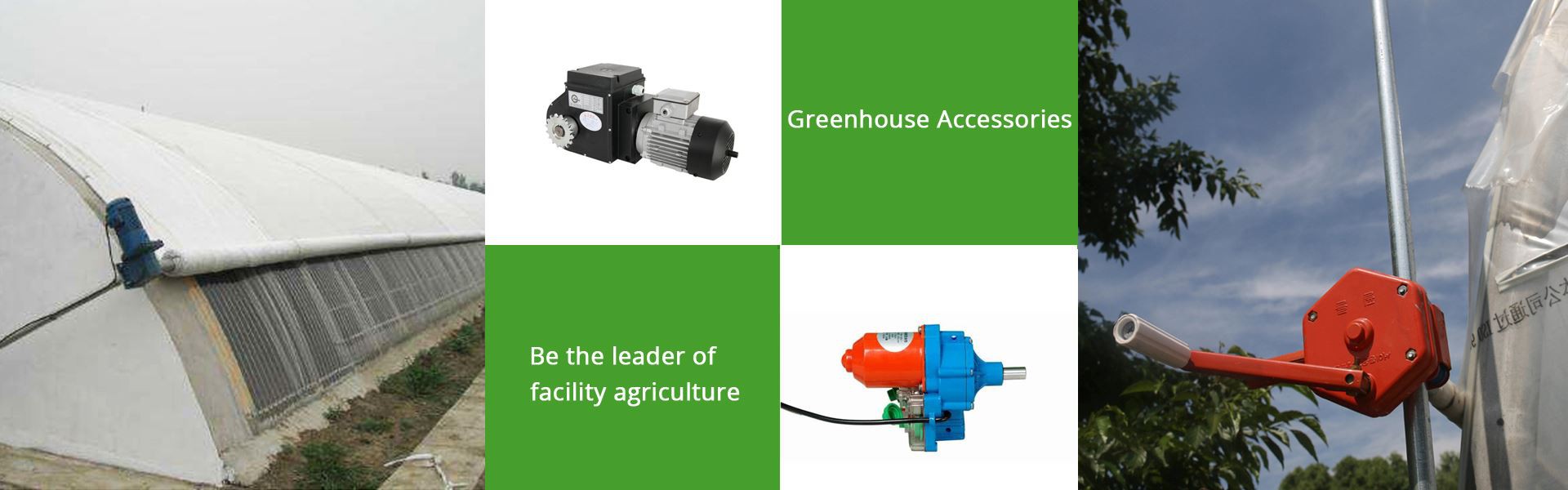
The thermal insulation of the solar greenhouse consists of two parts: the thermal insulation envelope and the movable thermal insulation quilt. Insulation on the front slope should be flexible material to be easily stowed after sunrise and lowered at sunset.
The research and development of new front roof insulation materials mainly focus on the requirements of easy mechanized operation, low price, light weight, aging resistance, waterproof and other indicators.
The solar greenhouse is mainly composed of three parts: the enclosure wall, the rear roof and the front roof, which are referred to as the "three elements" of the solar greenhouse. The front roof is the entire lighting surface of the greenhouse. When the light is weakened, cover the plastic film with the active thermal insulation quilt in time to strengthen the thermal insulation of the greenhouse.


